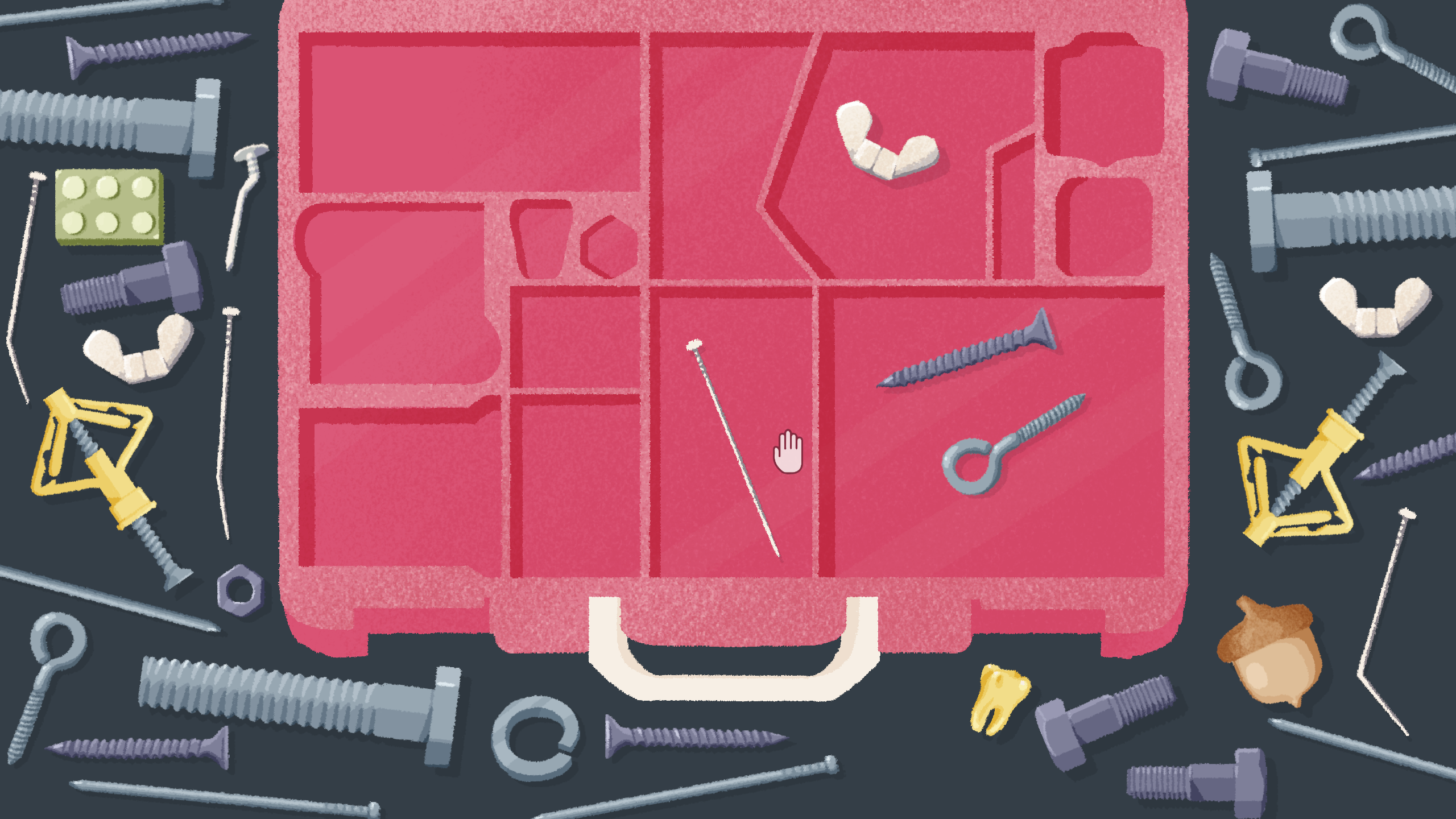
A Little to the Left stands apart from traditional puzzle games by rejecting dynamic, fetch-quest mechanics. Unlike games where players must “find a key to open a safe and enter a password,” its puzzles are static riddles. All information—the pieces, clues, and distractions—is presented at once. This design shifts the challenge from exploration to deep observation. By balancing puzzle difficulty with the players’ growing observational skills, the game induces a state of Flow, turning the mundane act of organizing into a profound, meditative Zen experience.
From Explicit to Implicit: The Joy of Epiphany
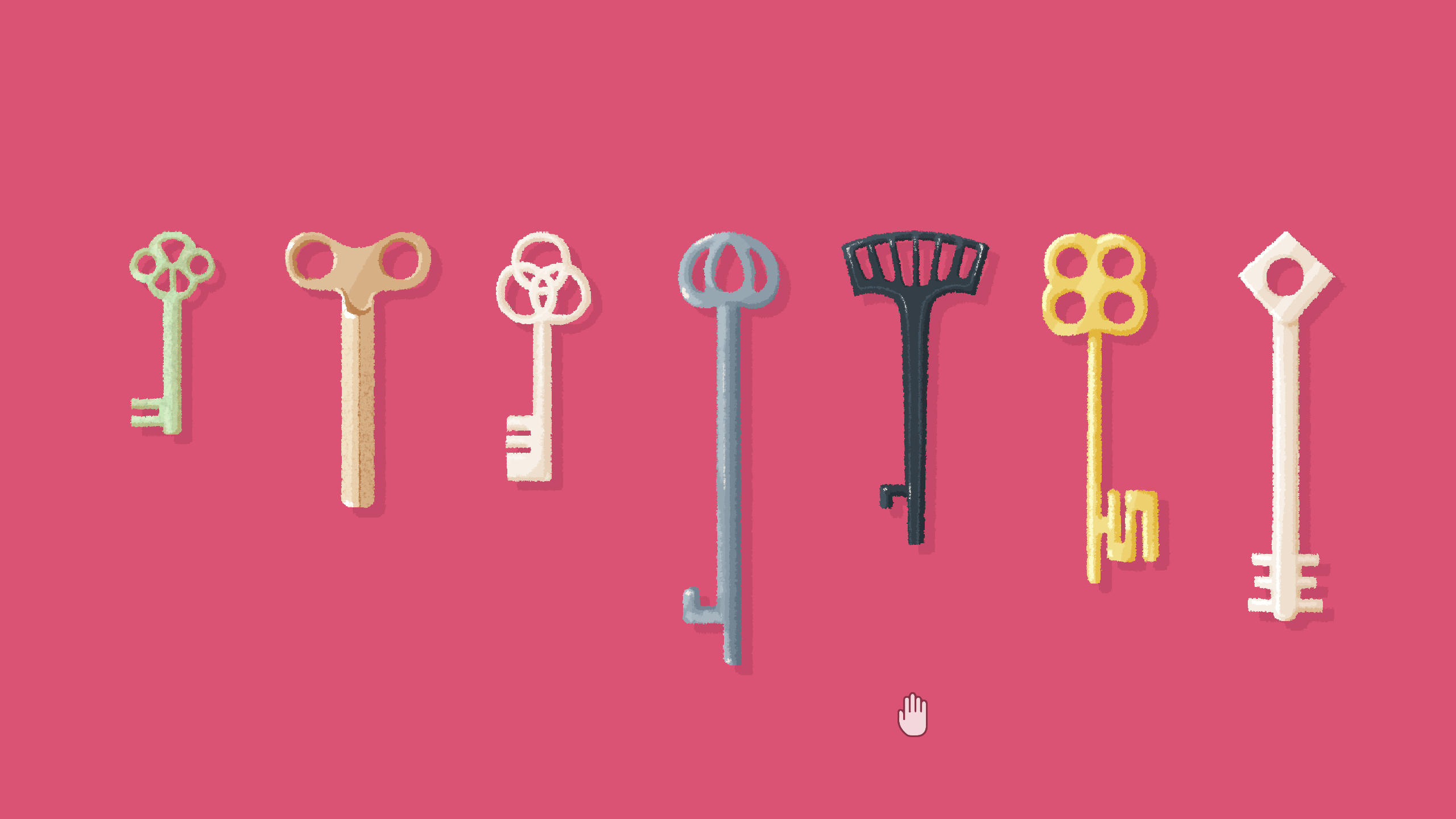
Sorting is a main puzzle type. As players progress, the sorting criteria shift from explicit to implicit, challenging them to re-examine everyday objects. The game uses distractions, relying on obvious visual traits to trap players in cognitive inertia. A prime example is the “Keys” level. The instinct is to sort by length, but another solution requires noticing the “teeth” in the number form. This layering of logic creates a cycle of “Observe-Guess-Verify-Reflect.” When players break through the distraction, it triggers a primal joy of epiphany. It compels us to see a common key not just as a tool, but as a shape and a number, fostering renewed appreciation for daily details.
“Keys” Level
Crucially, the game does not explicitly teach that multiple solutions exist. Instead, players might notice an empty star slot next to their earned star when finishing a level. Realizing that the rules themselves are part of the puzzle—that an empty slot implies a completely different solution exists—is its own moment of epiphany.
Affordance and the “Just Right” Sensation
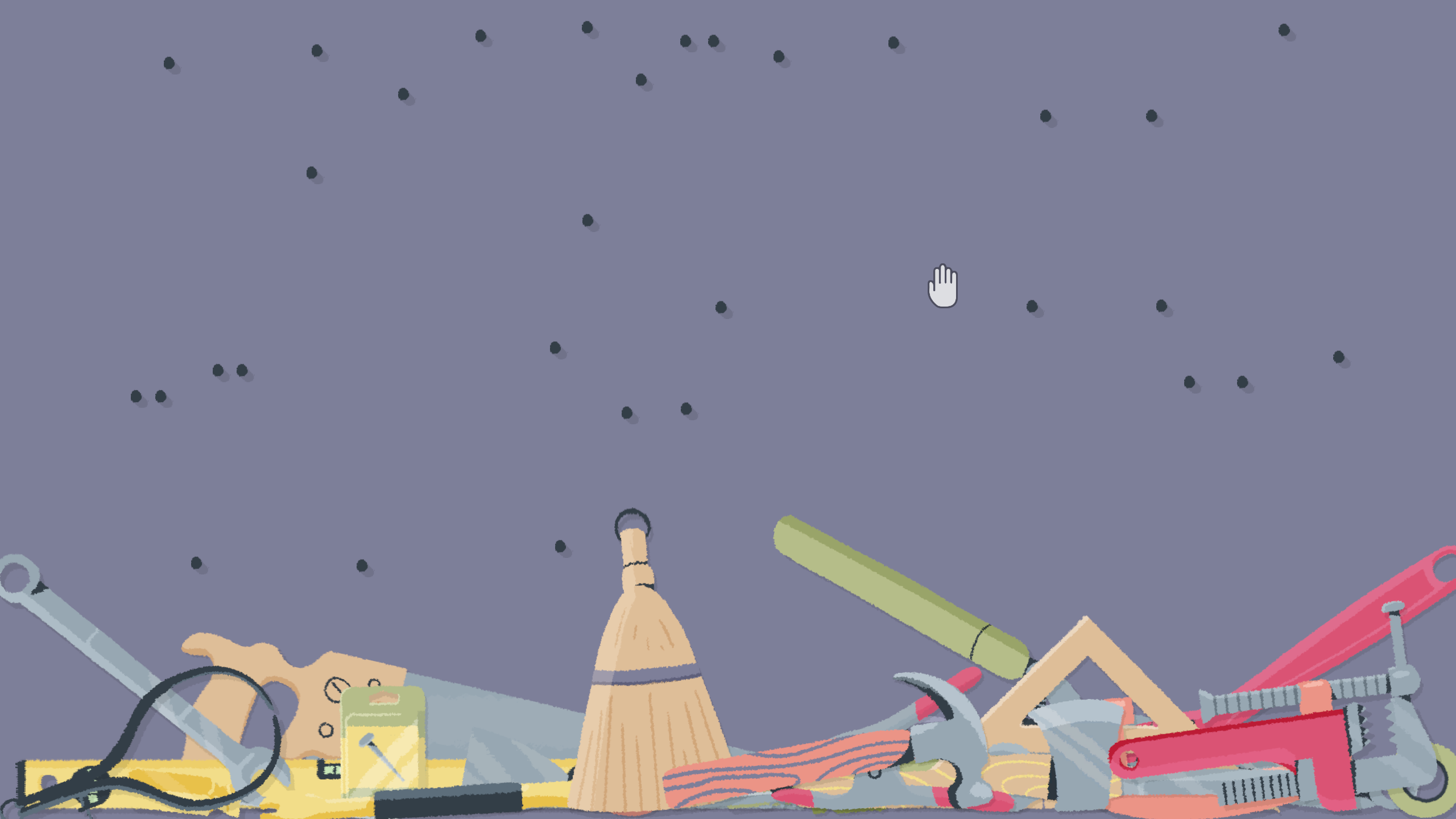
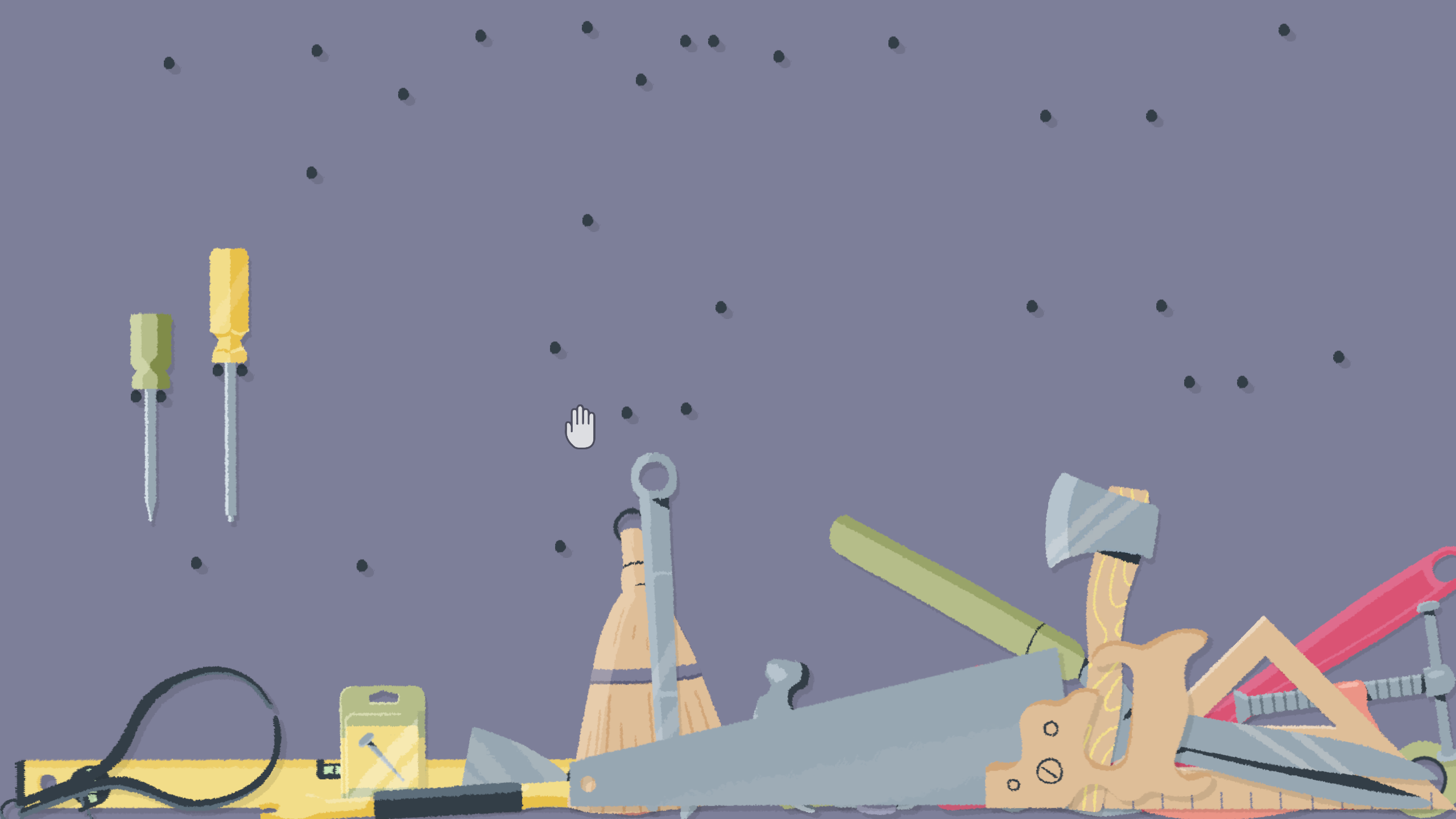
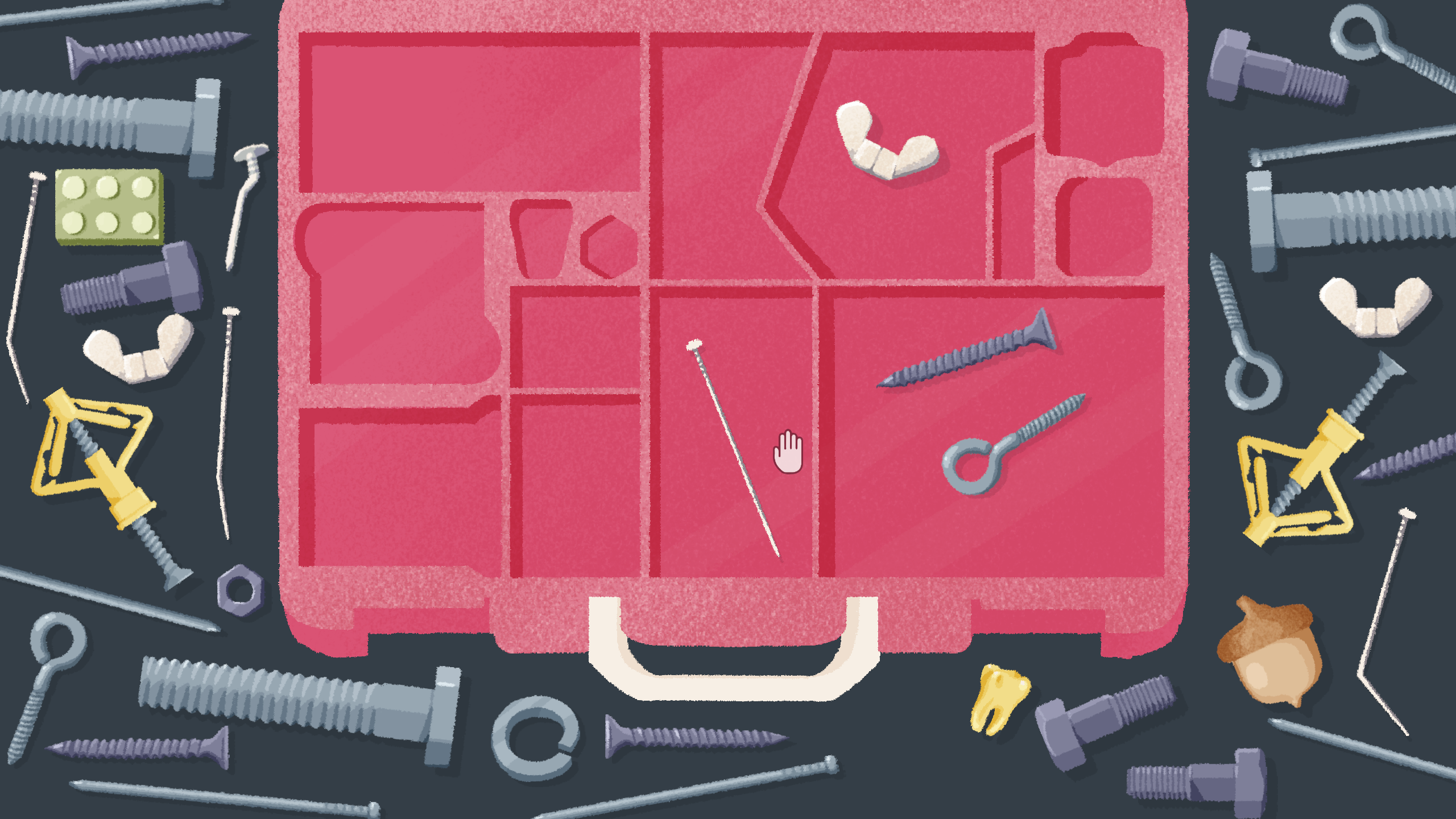
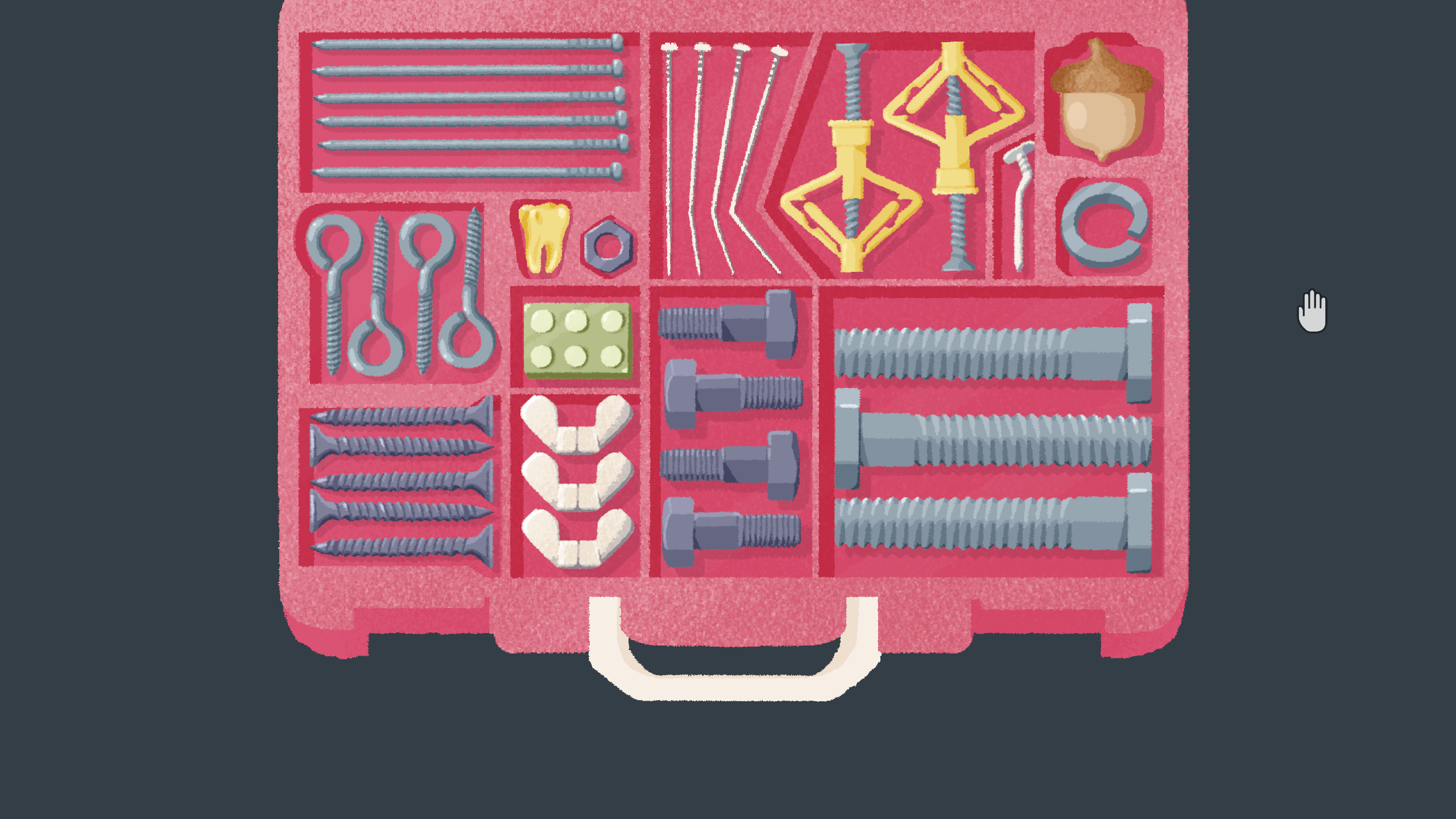
The soothing effect of the “Just Right” puzzles relies on Affordance. In design psychology, affordance refers to how an object’s physical properties suggest its use. In A Little to the Left, shape language is the main in-game affordance hint. In the “Workshop” level, the player sees two nails positioned closely together. Logic dictates they are too close to serve as separate hooks; instead, they function as a support bracket. Given the tools available, the player deduces they are meant to cradle the “shoulder” of a screwdriver.
“Workshop” level
This use of shape language serves a dual purpose: it acts as a natural clue and satisfies the desire for a perfect fit. As chaotic piles of items are slotted into their geometric homes, players experience a tangible sense of order emerging from chaos, providing a therapeutic counter to real-world anxiety.
Non-Intrusive Feedback and Gentle Guidance
To maintain this Zen state, the game uses non-intrusive feedback. Instead of breaking immersion with UI question marks, it relies on audio-visual cues. Visually, when an object hovers near a spot, it magnetically snaps into place, providing a satisfying sense of secure fit. Audibly, if it is in the right place, a crisp “ding” will be heard. This feedback encourages players to understand the logic step by step naturally, rather than brute-forcing the solution. It respects player agency, allowing them to persist in independent thinking until they achieve a satisfying resolution.
Conclusion
Ultimately, A Little to the Left elevates the triviality of daily life. By framing household chores as elegant puzzles, it lets players resonate with the creativity emerging from the ordinary. It does not just test our observation; it soothes anxiety and evokes a gentle, quiet heart. In a noisy world, this game offers a rare Zen state, proving that peace can be found simply by putting things exactly where they belong.